

Written by Nazyra Azla

It all started exactly 4 years ago when I set foot in the land of the setting sun, Japan. Before embarking on a one-year exchange program, I and 25 other participants were equipped with a lot of knowledge, such as how to manage expectations, deal with stress and language barriers, and face culture shock. One of the lessons we learned on how to handle culture shock was to suspend our judgment and observe as outsiders. Everything went smoothly, and little by little, I began to understand and become familiar with Japanese culture.
A year passed, and I returned to Indonesia. Among all the things I learned, there was nothing that reminded me of re-culture shock — that readjusting to my own culture was way harder than learning a new one. It was a battle of emotional and psychological stages to fit in again with my original culture.

The lost sense of belonging. I felt like I didn’t belong to any community. In Japan, people saw me as a foreigner from Southeast Asia; my behavior and thoughts were associated with Southeast Asia. But when I returned to Indonesia, people saw me behaving like a “foreigner” with my way of socializing, expressing feelings, communicating, and thinking. They said I couldn’t use what I had learned in Japan. This made me feel very lonely and lost, as I thought I didn’t belong to any particular community.
The last challenge I had was how I became judgmental. After returning, I questioned a lot about my own home country – why people behaved and acted in such manners, or why they thought in a certain way. For example, in Indonesia, people don’t like to stand in line for something, but in Japan, we could wait in line for a restaurant for 45 minutes or even longer. This disparity in behavior perplexed me.
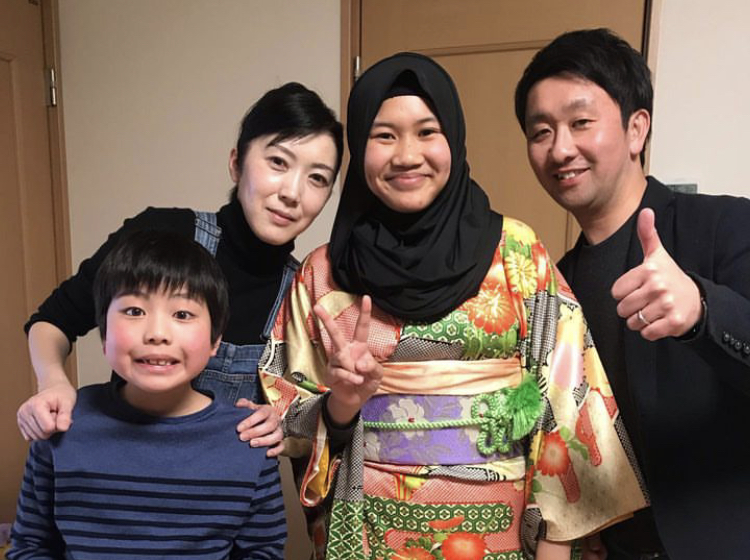

Looking back on my journey, I found priceless wisdom. I learned that confusion is okay and that it’s a normal part of life. The discovery of how to rely on myself and believe in my abilities was like going on a quest to uncover who I truly am. Exploring different viewpoints expanded my understanding of the world, and I cherished the skill of not being quick to judge others. And through it all, I conquered the challenge of fitting back into my own culture, like solving a puzzle that made me feel at home again.
At the end of this chapter, it took me roughly two months to adjust to the culture of my homeland. I realized that being somewhat confused helped me grow. I honed the ability to lean on myself and developed profound self-trust. The kaleidoscope of perspectives I encountered enlightened me, and the invaluable skill of suspending judgment was etched into my being. At the end of the day, I finally embraced the challenge of reintegrating myself into the tapestry of Indonesian culture.
 The Polyphony