

Written by Susan Li
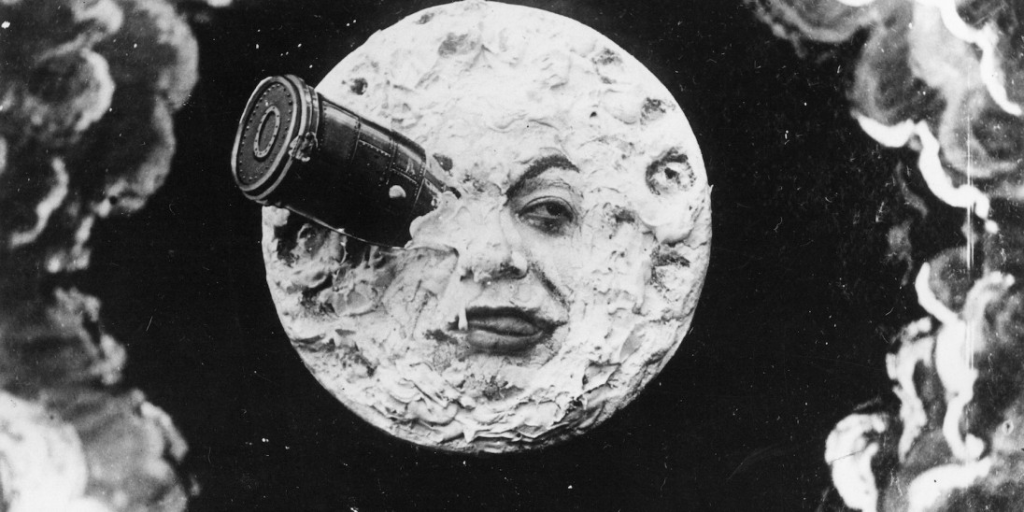
Beginning with Georges Méliès’s Le voyage dans la lune, science fiction cinema has developed and demonstrated an abundance and richness of cinematic spectacle (Yu, 1998). The presentation of spectacle enriches the narrative and documentary nature of the movie (Yu, 1998), thus adding to the wealth of imagination. While many science fiction films construct cinematic spectacle in the realm of space, technological exploration, and so on, the posthuman imagination also has multiple realms of exploration, including the creation of cyborg figures and monsters, and the creation of characters in non-human forms.
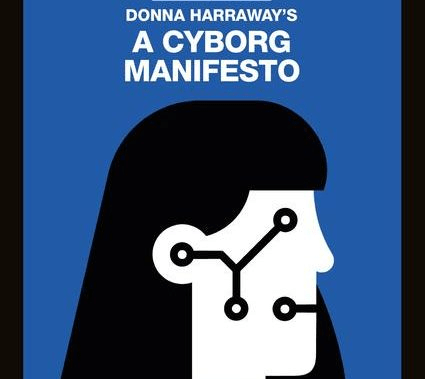
In Donna Haraway’s A Manifesto of Cyborgs published in 1985, she refers to an extension of the cyborg figure as a cybernetic organism, a mixture of machine and organism, a creature of social reality, and a character of science fiction (Haraway, 1991). This image of a fused entity of human and machine blurs and dismantles the boundaries of traditional conceptualizations of dichotomies, taking a questioning stance in discussing the dominance of human beings in both the natural and technological worlds. Monsters and non-human figures appear as important characters in film and television, mostly out of a combination of humans, gods, animals, etc., such as the mermaid figure, in which the identities of the woman and the fish are merged. The monster becomes a kind of intermediate transition between the “human world” and the “non-human world”. (Li, 2017)
The large number of cyborgs and monsters in contemporary cinema has brought about new imaginings that break away from the traditional construction of body and identity, and gradually form the imaginings of the future form of human beings. Under the increasingly blurred construction of body and identity, the connection and relationship between human beings, machines, and monsters, as well as human/non-human and cyborg subjectivity and subjective consciousness have become new perspectives and meanings.
Subjectivity was proposed by Descartes in the 17th century, who separated the self from the outside through the proposition “I think, therefore I am,” forming the dichotomy of subject and object, self and other, with the object becoming the “other” external to the self. Meanwhile, he argues that man is the possessor of nature and that animals are irrational machines. Sartre argues in Being and Nothingness that the gaze of the Other is important in the subject’s construction of the self and that by forcing the self to question “who am I” through the gaze of the Other, the subject creates a sense of self. (Sartre, 2003) Thereafter, Lacan argues that the Other refers primarily to the unconscious, the infant born without a separate self, in a state of wholeness with the outside world, with no distinction between the I and the other. He sees this state of wholeness, of endearing bliss, as an imaginative realm. By observing its own kind, the infant senses its own existence. Like looking in a mirror, the pressed formations reflect the ego, resulting in a certain sense of self-unity. This stage is considered the “mirror stage”. (Lacan, 2006) The former study explores the subjectivity of “human beings” based on the concept of “human beings”. The technological progress of the Anthropocene technology and technology as an extension of the human being accelerated the development of the Anthropocene and expanded new connections between humans and machines, and also between humans and non-human actors. Haraway in her cyborg manifesto says that the cyborg world’s construction has caused the boundaries between human/animal, organism/mechanism, and the visible/invisible to collapse.
“By the late twentieth century, machines had thoroughly blurred the distinction between the natural and the artificial, between mind and body, between self-development and external design, and many other distinctions that once applied to organisms and machines. Our machines are so vivid as to be disturbing, and we are so dead as to be frightening.”
Haraway, 1991
She adds animal/mechanical subjects, placing humans outside of the center. Kohn (2007) states in his essay that the biological world is constituted by the myriad ways in which beings―human and non-human―perceive and represent their surroundings, and that subjectivity, which human and other creatures formed through contact with other living beings. Distinguished from the traditional anthropocentrism of Descartes and others, biological/non-biological subjectivities and selves outside of humans are added to the discourse. Films such as Titanium, Artificial Intelligence, Blade Runner 2049, and The Shape of Water transform fictionalized digital images into real-world reproductions, presenting the imagined relationship between machines, nonhumans, and humans through the display of spectacle from a posthuman perspective. The blurring of boundaries under this new trend of posthumanism awakens “human beings” to their subjectivity, forcing us to think about a new kind of subjectivity.
Titane, directed by Julia Ducournau, won the Palme d’Or at the 2021 Cannes Film Festival. The film focuses on a protagonist who practices Haraway’s cyborg manifesto, portraying a new, dismantled dichotomy of gender, species, and so on. The protagonist, Alexia, was originally a girl who had a titanium plate implanted in her brain during surgery following a childhood car accident. From this, she (and it is still her) begins to build her identity as a Cyborg. Because of the implant, she became a combination of machine and human, which affected her emotions and desires, or her “humanity”, as well as her, or more neutrally, their gender, becoming a mix of male and female. Early on Alexia’s female form presents her dancing with a car. This straightforward symbol of the gender gaze directly demonstrates a typical as well as traditional gender dichotomy in which the female serves as an object to be gazed at by the male, a traditional scenario in which the female is immobilized in her gender identity in being gazed at.
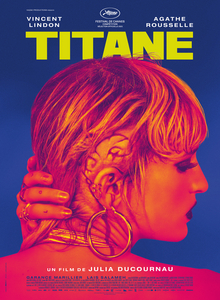
Alexia then transforms from her daughter’s identity to that of her son Adrian and becomes a firefighter, stepping into the traditionally male arena. Here the boundaries of gender become blurred, and Adrian/Alexia complete the fusion of their biological identities.
In the end, Adrian/Alexia return to their “father’s” home and seek refuge by embedding themselves in Adrian’s identity.
Adrian/Alexia’s cyborg imagery is not attributed to any paradigm but remains ambiguous and fluid. His identity changes as it flows, loving women as women, men as men, being attracted to cars, or giving birth in the male form. In the midst of Cyborg’s metaphor, they transcend the contradictions of binary identity oppositions in modern society and construct subjects with multiple selves.
The characters in the movie Blade Runner 2049 contain three types of subjects: humans/replicants/virtual. Replicants and avatars realize their self-identity by recognizing the external other, and K, as the main character of the movie, constructs his self-identity by observing humans and identifying with them. Since the replicant does not go through the stage of infancy, in Lacan’s discourse, human beings become the replicant’s only external mirrors to produce the subject and the self. In defining his identity as a replicant with “human” as the core, the replicant’s self-consciousness relies mostly on the established discourse system of “human”, and after K mistakenly believes that he is a real human being, the way to get rid of his replicant identity is to rely on the social discourse system of human nature, such as taking names and so on. K’s escape from the identity of the replicant after mistaking himself for a real human is based on the social discourse of human nature, such as names.
In order for humans to protect themselves from the threat of replicants, replicants were made to have a lifespan of only four years, and law enforcement agencies search for replicants who defect. This innate skill deficit and the acquired norm of roundups limit the identity of the replicants in a social system that strictly separates humans from machines. The replicants are placed in the position of “things” in a social structure in which humans are at the center, reducing the replicants to alienated subjects. K undergoes a constant change in self-perception in his quest for the truth, searching for his subjectivity in the replicant-human alternation, and ultimately believing himself to be a “human being”. Finally, K’s perception of himself as a “human being” collapses, and he realizes that the replicant is only an illusion in the mirror image of the human being. At this point, K understands that he is the Other who has been alienated by humans and turned into an “object”, but in the process of mistaking himself for a human being, he develops a sense of human subjectivity and is not satisfied with his Othered status.
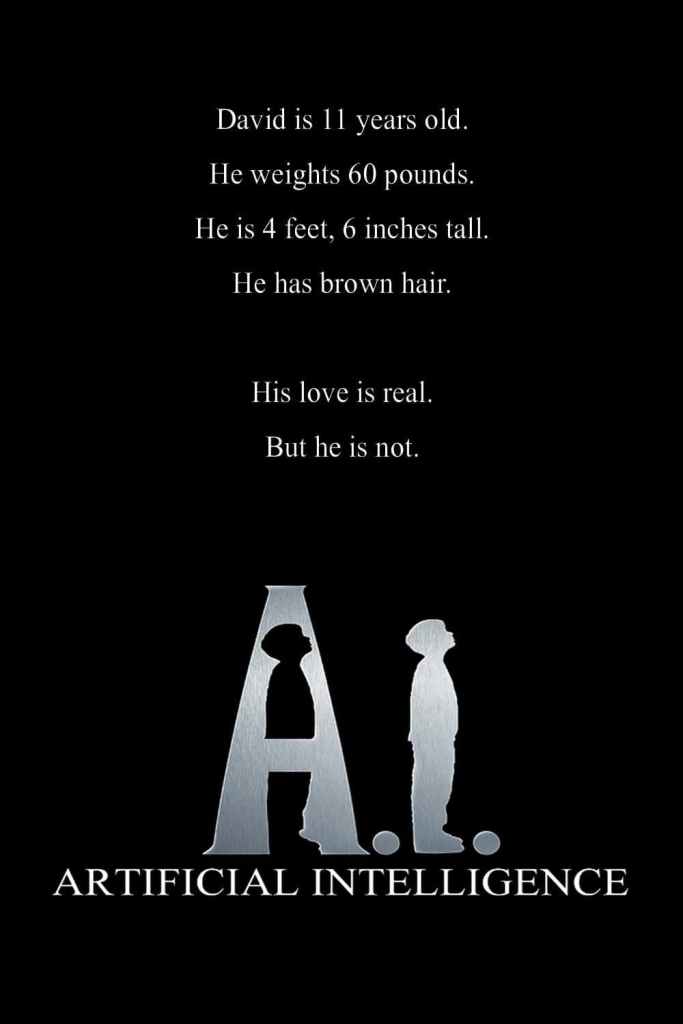
In the movie Artificial Intelligence, produced by Kubrick and directed by Spielberg, David is a simulated robot child created by the company Mimicronics to serve his family with his innate ability to love people. His new “parents”, whose original human child was frozen for treatment after an accident, purchased David because of the pain of losing their child, and he was abandoned several times in the process of getting along with his “parents” because he was a robot child and not a human child. However, to get his mother’s love, he thought that if he could become a real human child, she would love him. He spends the rest of his life searching for a way to become a real human child. He heard that if he found the Blue Fairy, he could become a real human being, and he suffered so much in order to find the Blue Fairy, and waited for her for thousands of years, but even after the Blue Fairy collapsed into a puddle of debris in the water, he was still a robotic child after all.
The 2017 film The Shape of Water, directed by Guillermo del Toro, takes Elisa as its main character, who discovers an amphibious water monster in a laboratory and gradually becomes its lover as she spends time with the monster. As a colonel in the U.S. Army, Strickland tortures amphibious people on many occasions in the name of experiments, while Hoffstetler, as a scientist in charge of researching amphibious people, has a great deal of sympathy for the amphibious people. Despite Hoffstetler’s warmth and sympathy for him, and his fight to keep the amphibian alive, the Colonel, his superiors, and others order it to be executed. The amphibian is seen as a monster, not included in any human paradigm or definition of the Other. The monster itself is, in Zizek’s terms, a result beyond cause, not based on any good reason, or something “new that changes in unexpected ways, and whose emergence disrupts any established stable structure.” (Zizek, 2014) That is, the emergence of the amphibious man escapes outside the traditional modern structure and becomes the antithesis of humanity called to death. But Elisa’s time with and love for the amphibian connects the two solidified as opposites, and while not a cyborg figure, blurs the boundaries between the species and reaches a scene of symbiosis with humanity in the midst of entanglement with them.
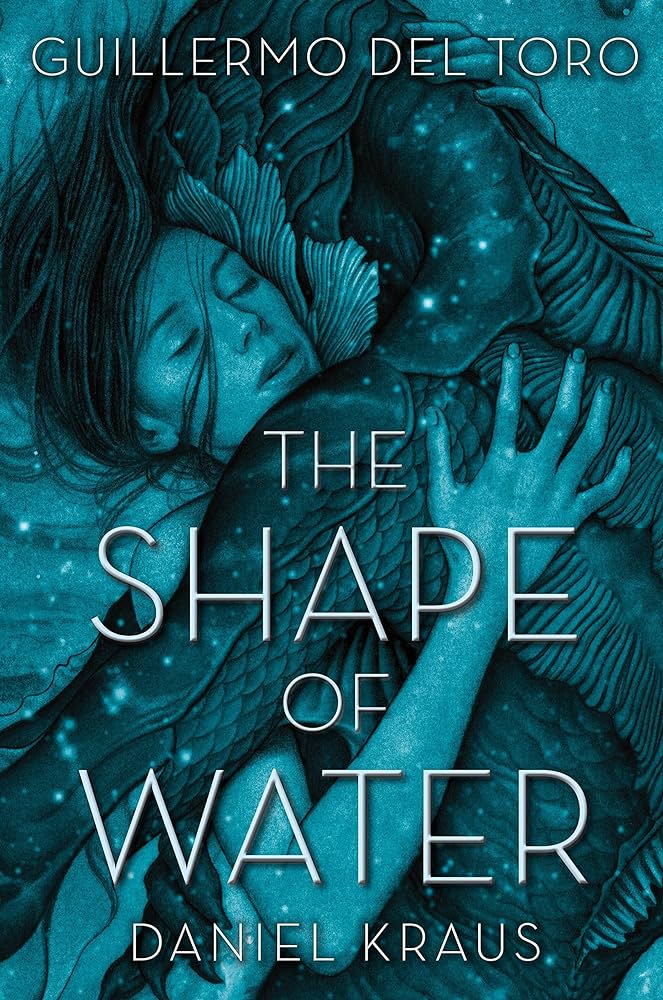
Several of the films present Haraway’s breakthrough dichotomies of mingling and collapsing between various realms: Titanium, Blade Runner 2049, and Artificial Intelligence for the mingling and fluidity between humans, machines, and simulacra; and The Shape of Water for the interaction between non-human creatures and humans. Braidotti argues that today’s rapid technological development has blurred the boundaries between natural and cultural objects, and that, unlike social constructivism’s binary distinction between the given (natural) and the constructed (cultural), living matter is dynamic and self-organized/autopoietic, which implies that the relationship between materiality and cultural, technological mediation is not a dialectical opposition, but rather a companionable continuum. (Braidotti, 2013)In Artificial Intelligence, Blade Runner 2049, and The Shape of Water, we can see that under the construction of modern anthropocentrism and during social and technological development, human beings still have an antagonistic relationship with non-human beings and that human subjectivity is beginning to feel anxious and threatened by the establishment and formation of self-consciousness and subjectivity in the non-human beings who have been othered. Posthumanism criticizes the social structures constructed by human beings by placing their own lives above other forms of life, ignoring non-human forms of life, not only the cyborg forms and monsters that appear in the film, but also the many other non-human beings, and the process of constructing the status of human subjectivity is accompanied by the establishment of the boundary between the human and the non-human. (Gao, 2019). The new configuration of posthuman subjectivity would complete the shift from the traditional humanist unitary subjectivity to nomadic subjectivity, “by removing the self-centeredness of the individualistic barriers and proposing a larger sense of intersectionality between self and other, including the nonhuman or ‘earthly’ other.” (Braidotti, 2013)
The interaction between the human and the nonhuman does not only occur in the imaginative and spectacle presentations of sci-fi films; the centrism that humans constitute for themselves under the development of modern technology and the consumption of nature is gradually relegated to a secondary position in the prominence of the posthuman, whereas the subjectivity of humans is formed in the gaze of the Other, and the subjectivity of the Other gazes at humans, forcing them to examine their centrality. Cyborg’s metaphors, the connections between humans, animals, and machines are not intended to allow us to reconfigure our paradigms of subjectivity while exploring newer, more diverse perceptions of the subject.
Reference
Braidotti, R. (2013). The posthuman. Polity Press.
Haraway, D. J. (1991). A cyborg manifesto: Science, technology, and socialist-feminism in the late twentieth century. In Simians, cyborgs, and women: The reinvention of nature (pp. 149-181). Routledge.
Kohn, E. (2007). How dogs dream: Amazonian natures and the politics of transspecies engagement. American Ethnologist, 34(1), 3-24. https://doi.org/10.1525/ae.2007.34.1.3
Lacan, J. (2006). Ecrits: The first complete edition in English. W.W. Norton & Co.
Sartre, J.-P. (2003). Being and nothingness (H. E. Barnes, Trans.; 2nd ed.). Routledge.
Žižek, S. (2014). Event: A Philosophical Journey Through A Concept. Melville House.
虞吉. (1998). 电影的奇观本性──从梅里爱到美国科幻电影的理论启示. 当代电影, (5), 11-14.
李洋. (2017). 电影史上的“人形怪物”. 当代电影, (11), 34.
高瑞怡. (2019). “怪物”与“生命伦理”的重思——批判后人文主义视角下的《水形物语》. 北京电影学院学报, (12), 23-33.
 The Polyphony